
Introduction: Why Clary Sage Oil Is Gaining Attention in Commercial Formulation
As consumer interest in botanical ingredients, clean-label skincare, and functional aromatherapy continues to grow, essential oils are becoming valuable components in modern product development. Among these ingredients, clary sage oil (Salvia sclarea) stands out for its distinctive aromatic profile and versatility across fragrance, personal care, and wellness applications.
For manufacturers, choosing the right botanical ingredient involves more than its scent. Formulators must consider botanical identity, chemical composition, extraction methods, quality documentation, and the reliability of their supply chain. These factors become especially important when moving from laboratory testing to commercial production.
Clary sage oil offers a combination of fresh herbal, sweet, slightly nutty, and floral characteristics. Its naturally occurring aromatic compounds, particularly linalyl acetate and linalool, make it useful in fragrance development and products designed around relaxing sensory experiences.
For businesses purchasing ingredients in larger quantities, working with an established supplier is equally important. M&U International supplies synthetic and natural aromatic chemicals, food additives, and essential oils to manufacturers in the United States and international markets. Its product portfolio and established supplier network make it a potential sourcing partner for businesses evaluating ingredients for commercial applications.
Whether you are developing a new skincare collection, expanding a fragrance line, or sourcing ingredients for a wellness brand, understanding clary sage oil’s properties can help you make more informed formulation decisions.
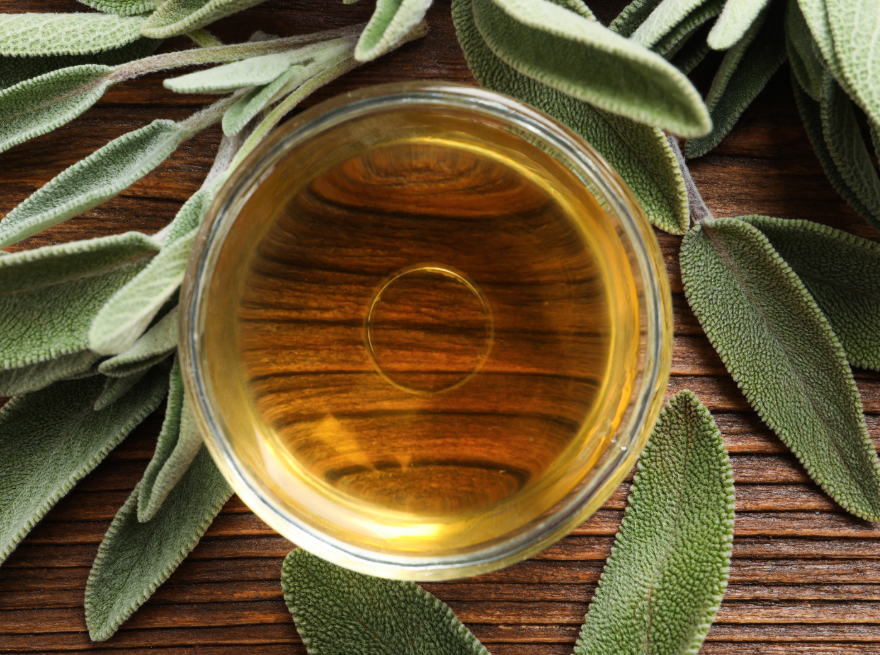
Understanding Clary Sage Oil: Botanical Identity and Chemical Composition
Clary sage oil comes from Salvia sclarea, a flowering plant belonging to the Lamiaceae family. Although it shares a botanical family with common sage (Salvia officinalis), the two plants have different aromatic and chemical profiles.
This distinction matters to manufacturers because botanical identity affects ingredient specifications, fragrance characteristics, and formulation decisions. Buyers should always verify the scientific name on product documentation rather than relying on general names such as sage oil.
How Is Clary Sage Essential Oil Extracted?
Clary sage essential oil is commonly obtained through steam distillation of the plant’s flowering tops and aerial parts, which may include leaves and stems.
During steam distillation, steam passes through the botanical material, carrying volatile aromatic compounds into a cooling system. The condensed mixture separates into essential oil and aromatic water, allowing the oil to be collected without relying on solvent extraction.
The resulting oil has a characteristic herbal-floral aroma that can be incorporated into fragrance compositions, personal care products, and aromatic blends.
Extraction conditions, botanical material, growing environment, and harvest timing can influence the resulting oil’s chemical composition. For this reason, manufacturers should evaluate the actual batch specification instead of assuming every clary sage oil will have an identical profile.
Key Chemical Constituents of Clary Sage Oil
Clary sage oil is particularly recognized for its linalyl acetate and linalool content. These compounds contribute to its characteristic fragrance and make it relevant to perfumery and personal care development.
The following table presents illustrative composition findings from published chemical analyses. These are research observations, not guaranteed commercial specifications for every supplier or batch.
| Parameter | Description | Formulation significance |
| Botanical name | Salvia sclarea | Confirms the intended plant species |
| Botanical family | Lamiaceae | Identifies its botanical classification |
| Extraction method | Commonly steam distillation | Produces a volatile aromatic oil |
| Linalyl acetate | Approximately 30%–63% in selected published analyses | Contributes sweet, floral, and fresh aromatic characteristics |
| Linalool | Approximately 11%–29% in selected published analyses | Contributes floral and soft aromatic notes |
| Other constituents | Germacrene D, geranyl acetate, alpha-terpineol, and other compounds | Contribute to the overall aromatic profile |
| Quality assessment | GC/MS, applicable specifications, COA, and SDS | Supports ingredient identification and purchasing decisions |
Published research demonstrates that chemical composition can vary considerably between samples and growing locations. One study reported 49.1% linalyl acetate and 20.6% linalool, while another identified 62.6% and 11.1%, respectively.
For procurement teams, this is why batch-specific analytical documentation is important. A supplier’s specification sheet and Certificate of Analysis (COA) can help buyers evaluate whether an ingredient meets their formulation requirements.
High-Value Commercial Applications for Clary Sage Oil
Clary sage oil has applications across several industries because of its distinctive scent and compatibility with different aromatic compositions. Its commercial value is not limited to traditional aromatherapy. It can also support fragrance development and the sensory positioning of personal care products.
Here are four areas where product developers may consider incorporating this botanical ingredient.
1. Fine Fragrance and Natural Perfumery
Clary sage oil is a useful ingredient for perfumers looking to introduce herbal, floral, and slightly warm notes into fragrance compositions.
Its aromatic character can complement several fragrance families, including:
- Citrus compositions featuring bergamot, lemon, and sweet orange.
- Floral blends featuring lavender, geranium, and rose.
- Woody fragrances featuring cedarwood and sandalwood.
- Herbal compositions featuring rosemary and other aromatic botanicals.
Another reason clary sage is relevant to the fragrance industry is its association with sclareol, a diterpene alcohol obtained from clary sage. Sclareol is an important industrial precursor used in the production of ambroxide-related fragrance materials.
However, essential oil and isolated sclareol are different materials. Buyers should not assume that the presence of clary sage oil automatically guarantees a particular sclareol concentration or fragrance-fixative performance.
For fragrance manufacturers, batch consistency and reliable ingredient identification are essential when developing products that need to maintain a recognizable scent profile.
2. Skincare and Personal Care Formulations
Botanical ingredients are widely used in skincare because they contribute aromatic qualities and support product positioning around plant-derived ingredients.
Clary sage oil may be incorporated into:
- Facial oils and botanical serums.
- Body lotions and creams.
- Aromatic massage oils.
- Bath and body products.
- Personal care products featuring herbal fragrance profiles.
Its use in skincare should be based on the intended product function, appropriate concentration, and finished-product safety assessment.
Although clary sage is sometimes marketed for balancing or soothing properties, formulators should avoid treating these traditional associations as established clinical benefits. Claims involving acne treatment, sebum regulation, anti-aging, or other therapeutic effects require appropriate evidence and regulatory review.
Essential oils can also cause irritation or sensitization in some users. Proper dilution, ingredient assessment, and finished-product testing are important before introducing them into consumer skincare products.
3. Haircare and Scalp Care Products
Haircare manufacturers can also explore clary sage oil as an aromatic ingredient in botanical-inspired product lines.
Potential formulation applications include:
- Shampoo and conditioner fragrance systems.
- Scalp massage oils.
- Leave-in hair treatments.
- Botanical hair masks.
- Aromatic hair and body care products.
Its herbal-floral scent can complement other botanical fragrance ingredients, helping brands create a consistent sensory identity across different products.
However, manufacturers should distinguish between fragrance benefits and proven hair or scalp treatment effects. Claims about strengthening follicles, preventing hair loss, or treating scalp conditions should not be made without appropriate supporting evidence.
4. Functional Aromatherapy and Wellness Products
Clary sage oil is also associated with traditional aromatherapy and wellness applications. Its soft herbal and floral aroma makes it a potential ingredient for products designed around relaxation and sensory experiences.
Possible applications include:
- Diffuser and aromatherapy blends.
- Pillow and room mists.
- Massage oil formulations.
- Spa and wellness products.
- Botanical fragrance collections.
For wellness brands, the ingredient’s aromatic character can help establish a recognizable product experience. Formulators should still follow applicable safety recommendations for each application, particularly for products used on the skin or around sensitive populations.
Wholesale Clary Sage Oil: What Buyers Should Consider When Sourcing in Bulk
Choosing an essential oil supplier is an important purchasing decision for manufacturers. A raw material that performs well during initial product development must also remain suitable when production volumes increase.
For businesses sourcing wholesale clary sage oil, several factors deserve attention before placing a bulk order.
1. Verify Botanical Identity and Chemical Composition
Essential oil adulteration is a concern in the global ingredients market. Some products may contain synthetic aromatic compounds, substituted oils, or added materials that change the original chemical profile.
For example, adding isolated linalool or linalyl acetate to an essential oil can affect its analytical composition without necessarily making it equivalent to authentic clary sage oil.
Buyers should request appropriate documentation, including:
- Botanical name and plant part used.
- Country of origin.
- Extraction method.
- Batch-specific GC/MS analytical report, when available.
- Certificate of Analysis (COA).
- Safety Data Sheet (SDS).
- Relevant allergen and regulatory documentation.
GC/MS analysis helps identify and estimate the relative abundance of volatile compounds in an essential oil. However, it should be considered alongside other quality checks and supplier documentation rather than treated as an absolute guarantee against every form of adulteration.
2. Consider Origin, Harvesting, and Supply Availability
The geographical origin of clary sage can influence its chemical composition, aroma, and commercial availability.
Clary sage is cultivated in several regions, including parts of Europe and other suitable agricultural environments. Differences in climate, soil, botanical variety, harvesting practices, and distillation conditions can affect the characteristics of the resulting oil.
Seasonal changes may also influence the availability and pricing of botanical raw materials.
For manufacturers, these variations can create challenges when maintaining consistent production schedules. A change in ingredient origin or batch composition may require additional evaluation before a formulation can be approved.
Working with a supplier that maintains established sourcing relationships can help purchasing teams plan around availability, documentation requirements, and commercial order volumes.
3. Evaluate Packaging and Storage Requirements
Essential oils contain volatile aromatic compounds that can deteriorate when exposed to excessive heat, light, oxygen, or unsuitable storage conditions.
For bulk clary sage oil, buyers should consider packaging that protects the ingredient throughout transportation and storage.
Common considerations include:
- Tightly sealed, compatible containers.
- Appropriate industrial packaging, such as suitable aluminum containers or lined steel drums.
- Protection from direct sunlight.
- Cool, dry storage conditions.
- Minimizing unnecessary exposure to air during handling.
Nitrogen blanketing may also be considered where appropriate for the packaging system and supplier’s handling procedures.
Shelf life should always be confirmed using the supplier’s product-specific documentation. A two- or three-year shelf life should not be assumed for every clary sage oil batch.
Proper inventory rotation and monitoring of storage conditions can help manufacturers maintain ingredient quality between deliveries.
4. Match Bulk Quantities to Production Requirements
Ordering wholesale essential oils requires balancing purchasing costs with actual manufacturing demand.
Smaller quantities may be appropriate for research and development, initial stability testing, or pilot production. Larger pails and drums may be more practical when a formulation has moved into regular commercial manufacturing.
Before committing to a large order, purchasing managers should consider:
- Minimum order quantities.
- Available packaging sizes.
- Sample availability.
- Lead times and replenishment schedules.
- Batch documentation.
- Pricing at different order volumes.
- Shipping and storage requirements.
A supplier that can discuss these requirements with your procurement team can help make ingredient sourcing more predictable.
Why Choose M&U International for Essential Oil Sourcing?
Finding a suitable ingredient is only one part of successful product development. Manufacturers also need a dependable supplier who understands the importance of product quality, sourcing, and consistent customer support.
M&U International is a supplier of synthetic and natural aromatic chemicals, food additives, and essential oils. Established in 2010, the company has developed relationships with manufacturers and suppliers in domestic and international markets.
For businesses evaluating wholesale essential oil sourcing, M&U International offers several advantages worth considering.
An Established Supplier Network
Reliable supplier relationships are important when purchasing botanical ingredients for ongoing manufacturing. M&U International works with an established network of manufacturers to support ingredient sourcing and customer requirements.
This network helps the company serve businesses with different purchasing needs, from ingredient evaluation to larger commercial orders.
A Diverse Ingredient Portfolio
M&U International offers products across several categories, including:
- Natural and synthetic aromatic chemicals.
- Essential oils.
- Food additives.
- Ingredients for fragrance and flavor applications.
Having access to multiple ingredient categories through one supplier can simplify procurement for manufacturers developing products across different markets.
Customer Support for Commercial Buyers
Ingredient selection often involves technical and purchasing questions. Manufacturers may need help identifying suitable materials, reviewing product specifications, or determining whether an ingredient is available in the required quantity.
M&U International encourages prospective buyers to contact its team for product inquiries and assistance with sourcing requirements.
For additional information about the company’s supplier network and approach to ingredient distribution, read Unveiling a Fragrant Revolution: M&U International LLC Sets the Bar High for Aromatics, Additives, and Essential Oils Supply.
Frequently Asked Questions About Wholesale Clary Sage Oil
1. What is clary sage oil used for in commercial formulations?
Clary sage oil is used in fragrance compositions, skincare products, haircare formulations, aromatherapy blends, and spa products. Its herbal, sweet, and floral aromatic profile makes it suitable for different personal care and wellness applications.
2. What is the difference between clary sage oil and common sage oil?
Clary sage oil comes from Salvia sclarea, while common sage oil comes from Salvia officinalis. Although both belong to the Lamiaceae family, they have different chemical compositions and aromatic characteristics. Buyers should verify the botanical identity before purchasing either ingredient.
3. What chemical compounds should buyers look for in clary sage oil?
Linalyl acetate and linalool are two major aromatic constituents commonly identified in clary sage oil. Other compounds may include germacrene D, geranyl acetate, and alpha-terpineol. Their concentrations can vary depending on the botanical source and production conditions.
4. What documentation should manufacturers request when buying wholesale clary sage oil?
Manufacturers should request a Certificate of Analysis (COA), Safety Data Sheet (SDS), botanical identification, and relevant GC/MS analytical documentation when available. These documents help buyers evaluate ingredient identity, composition, handling requirements, and suitability for their intended applications.
5. How should bulk clary sage oil be stored?
Clary sage oil should generally be kept in tightly sealed, compatible containers in a cool, dry, dark environment. Exposure to heat, oxygen, and direct sunlight should be minimized. Buyers should follow the supplier’s recommended storage conditions and documented shelf life.
Source and Further Reading
- Salvia sclarea Essential Oil Chemical Composition and Biological Activities – Published research on clary sage oil composition.
- Chemical Composition of Salvia sclarea Essential Oil – Research examining chemical profiles using GC/MS analysis.
- Enzymes for Synthetic Biology of Ambroxide-Related Diterpenoid Fragrance Compounds – Research discussing sclareol as an industrial precursor for fragrance materials.
Source Your Essential Oil Ingredients with M&U International
Developing a successful skincare, fragrance, or wellness product starts with choosing ingredients that meet your formulation and manufacturing requirements.
Whether you are researching clary sage oil for a new product line or looking for a dependable source of aromatic ingredients, M&U International can help you explore available products and sourcing options.
R&D teams, purchasing managers, and private-label manufacturers are encouraged to contact the M&U International team to:
- Request product specifications and available quality documentation.
- Inquire about laboratory samples for formulation testing.
- Discuss wholesale pail and drum pricing.
- Check product availability and commercial order requirements.
Visit the M&U International to learn more about the company and its ingredient portfolio.
Ready to discuss your ingredient requirements? Contact M&U International at sales.us@mu-intel.us or call 908-359-9000 to discuss your sourcing needs.